
Mission critical - Energy and Mobility
Popa, D. (2026)
Energy - mission critical in the defence sector
Fuel stocks next to the frontlines
Effects of an integrated energy strategy
Nuclear energy
Mobility corridors and mobility patterns
Review of MIVD & AIVD threat assessment reports
Popa, D. (2026)
April ’26 has observed the publication of the annual threat assessment reports of both the Military and the Civilian Dutch Security Services: the MIVD and the AIVD. The coordination of their publication as well as the cross-references and observed overlaps in certain analysed and presented themes, such as extremism and cyberthreats, indicate, on the one side, as others have rightly noted, the increasing difficulty to separate military and civilian targets in the new era of warfare and on the other side, the increasing need for coordination between the civilian and military sectors to counter these threats.
The reports have received attention from national and international audiences. The open positioning has a signalling function in terms of capabilities and alertness levels (much like the public messaging of the UK government and military “We see you” in response to Russian activity in British waters at the beginning of April 2026). Yet, applying the principle, “don’t make the enemy any wiser”, what is not found in the two reports and what can be read in between the lines is just as important, if not more so, than what is written.
Battlefield Europe. Foresight exercise on security and radicalization
Popa, D. (2026)
Note on water resilience during conflict and crisis.
Popa, D. (2026)
In anticipation of crisis or war governments and entities responsible for critical infrastructure and crisis management must proactively implement resilience measures. Solutions implemented from war or conflict stricken contexts such as Ukraine can be imported via lessons learned.
Shaping narratives for mobilization and international alignment for the war effort
Popa, D. (2026)
Mobilization often observes a large wave of voluntarily enrolment at the beginning of a conflict that is perceived as a war for existential survival and is feed by strong nationalism. National sentiment is shocked into manifestation by radical changes such as an invasion while beforehand it is part of an assumed long term nation building strategy that is learned and assimilated, and therefore must be taught, shaped and grown. Divisions within society regarding compulsory mobilisation can be inferred from several mass media or social media materials.
Will to fight is a multi-construct dynamic concept with dimensions ranging from state to individual level. An operationalization of the concept that facilitates transposition into actionable programs at different levels still proves challenging, not least because it requires longitudinal planning and anticipatory sustained action. The multi dimensional construct of will to fight thus proves difficult to translate into actionable measures that can be incorporated in strategy, education and training. Including the distinction between national and foreign fighters in the analysis on the will to fight brings additional value to military planning on tactical and operational levels.
The impact that technology has on the will to fight is a factor that requires reconceptualization in the context of the new way of war. If contact with the enemy affects the durability of several motivator factors of the will to fight, technology deployed on the battlefield changes the meaning of contact with the enemy and by means of cascading effects affects will to fight.
The cultural home front
The cultural distant front
Popa, D. (2026)
The experience of war in Ukraine is presented on different stages in the West, in realistic and aesthetic experiences. The home and distant fronts are brought closer by acts of transposition, visualisations and interpretation.
What is striking about an exhibition is its static character. In this it does not capture the essence of a hot conflict: its energy – vital in its defensive manifestation and forces – destructive in its offensive character. War - especially drone warfare - is perpetual movement, noisy and smelly.
A drone hanging in a church is a strange sight
For the neophyte, it might be an enlightening experience.
For the connoisseur, the sight infuriates:
a drone seen above is never static, never silent, never friendly.
The sound from a surveying Shahed that circles in the dark in look for its prey bears the meaning of intent.
The European Security Palimpsest
Popa, D. (2026)
The “under destruction” label under which the Munich Security Conference was held and accompanying characterizations of new world order suggest what can be seen as an induced or directed terraforming exercise, with phased yet not fully controllable implementation.
The vacuum of solutions for the war in Ukraine is apparent because any defence of a rationally de-constructed and re-constructed notion of peace inevitably determines a cognitive dissonance in the European position that – once engaged in the development and ways to stop the conflict – is forced to rationalize for herself conflictual and inherently irreconcilable options.
The consolidation of a multipolar world, self-sufficient in purely existential terms yet antagonistic in interests would likely only enhance chances and intensities of conflict. Observed system instability and dilution of the once unified “West” are further enhanced by EU enlargements discussions.
While long having advocated for a value based identity, decision making process and governing system, Europe cannot now brake away from these declared values and undergo a sudden shift in narrative. She is forced to publicly assume the balanced approach, engaging on multiple fronts, internally and externally in lengthily multi-stakeholder discussions. While working towards reaching sovereignty in the digital and defence fields she is forced to engage in this permanent re-writing and re-viewing of the declared defence posture, simultaneously recalibrating to internal and external escalations of conflict. The European security posture is a palimpsest, thus being re-written on the same pergament.
The seams of European construction still remain noticeably visible, not because of their direct consequences but because of desired and assumed position of a seamless project. In fact it is a polygamic marriage that is now seeing the unanticipated negative effects of an inter-breeding going dangerously wrong.
One can only hope that the initial envisioned objective doesn’t’ mutate in such an extent as to become incongruent with the developed security palimpsest and that this time we all recognize another Chamberlain letter event when we see one.
The integrated battlefield
Popa, D. (2026)
The paradox of the integrated battlefield is that while it is made transparent by its digitalisation, it expands to sizes or territories that make it extremely difficult and resource intensive to keep in constant overview. The perimeter of the integrated battlefield expands, requiring a constant flow of resources to monitor it and to enable timely responses and decisions. The battlefield thus turns into an eco-system, where drones, satellites and maritime autonomous systems create a technological network in which sensors, communications channels and effector systems complement each other (Wennink, 2025). The integrated battlefield is an elongation of the front lines in terms of technological development and deployment, with encounters with the enemy’s technology and lateral technological encounters being needed for driving development further at exponential speed. This integration is resource intensive, especially for the deployer defending the home front, who needs to add the management and logistical chains for the deployment and development of the novel technologies to its war effort. The battlefield in Ukraine thusprovides a unique testing ground for emerging technology and shortens innovation cycles, allowing for cascading incorporation of results in Western armies. Faster deployment of technology to the end users on the front lines is wanted, needed and undertaken, weather in the physical or digital battlefield. With the growing manifestation and overlapping effects of grey warfare, cyber-attacks and geopolitical re-alignments disrupting supply chains, autonomy in the technological and digital space becomes one element of the integrated battlefield that increases state defence capabilities.
- Sovereignty over digital and technical capabilities
- Drone warfare and consolidation of air defence lines
- Degrees of technological complexity and responsibility
- AI on the battlefield
Forward facing approach to consolidating and integrating resilience at state level
Popa, D. (2026).
2025 has seen an explosion of resilience programms being developed and implemented across Europe, in reaction to observed increasing threat levels, warnings from intelligence services on the risk of sabotage and attacks on national interests and security and following the observations of the live and cumulative effects of the acute and prolonged war in Ukraine.
Resilience programmes are either government planned, coordinated and actively encouraged, practiced and implemented at population level, or have matured organically, in countries faced with the risk of conflict and war or war.
The report incorporates analysis of resilience programms developed and implemented in Western countries – The Netherlands, Sweden, the United Kingdom and observations on resilience measures implemented in Ukraine. It puts forward a series or recommendations in regards to transferring lessons learned and the need for adapting resilience programms to national profile, based on the premises that the choices made when solving national problems reflect national identity. As such, the transfer of any good practices or lessons learned from contexts that have different views and internalised practices of solving national problems must be considered in terms of fit with one’s own state character. In states that maintain their course in terms of what makes their way of life and show consistency of espoused believes even during changes of governments, how national crisis are solved reflects a set of internalised practices and systems of values developed historically. The choices made when solving national problems reflect national identity. As such, the transfer of any good practices or lessons learned from contexts that have different views and internalised practices of solving national problems must be considered in terms of fit with one’s own state character.
The report addresses:
War and conflict ready legislation
Changes within military structures
Reviewing defence personnel capacity
Military – civilian symbiosis
Interconnected resilient infrastructure
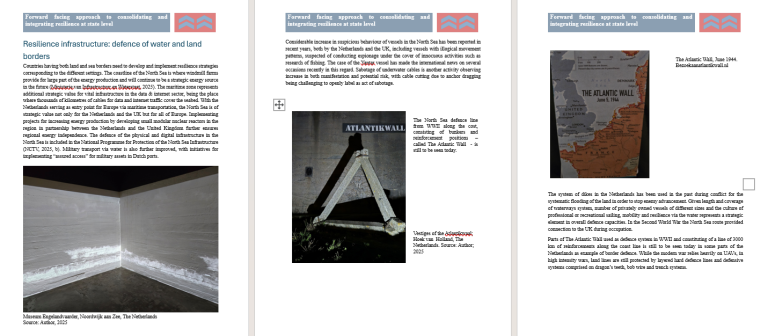
Resilience infrastructure: defence of water and land borders
Communicating threats to the population
National resilience programms
Urban resillience
Strategic relevance through technological & digital sovereignty in times of geopolitical instability
D. Popa (2026)
The multiplication of conflicts and changing priorities of long term allies turned the call for technological and digital sovereignty, that up to recently overtly manifested itself rather as a strategic economic choice meant to stimulate the European internal market - since calling the digital dependency flat out a risk of foreign influence between partners was extremely uncomfortable in political circles – into an acute need. In the Netherlands, two cases from 2025 are emblematic for the relationship between technology and geopolitics: the Nexperia case and the trade with Israel in the technology domain. The public position of the Dutch Minister of Foreign affairs in the Nexperia case came in anticipation of a fundamental change taking place on the geopolitical stage and the hard actions needed for years to come to respond to this ongoing change, re-organisation and realignment of global interests and partnerships. The cases reveal the influence that criticality of the technology has on the span of instruments and measures which a state can or should deploy for the protection of its interest. The two cases don’t mirror each other when put face to face in terms of the political reaction and the diplomatic implications. In one case the state interest was put above economic interests as motive for governmental intervention in the private sector. In the other case, humanitarian principles regarding the situation in a contested territory was reason to call for pressure in the form of sanctions and cutting back on trade volumes with a long standing trade partner in the technology field. In the latter case, while we denounce foreign intervention in domestic affairs we should ponder in what measure sanctions, export control regulations and accompanying rules are used as behaviour shaping instruments on the international stage. In the name of acting for the defence of our values, we risk going on the path we criticize in others. The danger here is not the action itself, but the dissonance that results between discourse and taken action. The questions raised in the Dutch House of Representatives around technology and materiel deliveries to Israel mirrored international public positioning of neighbouring countries, and international positioning in relation to Israel was one of the underlying arguments for reevaluation of own position in regards to technology trade and weapons delivery. However, the situation in the Middle East reverberated differently in European capitals and governments, reflecting degrees of proximity, ties and active positioning on the international stage, or what could be labelled as interest and international involvement projection. While political accountability might ask for public inquiry and declared positioning on the spectrum formed by electorate sentiment and international standpoints on issues of international rules, in hard practical terms and – ideologically more important - in terms of the reputation and stance of a state in international affairs - consistency of relationships and nourishing of relationships for observing self-interest remains the rational behaviour in geopolitics. The common red line for these two cases showcasing how technology and politics are intertwined and how unified firm positioning is needed in foreign policy relations is the idea that while we fight for upholding our way of life, we must calibrate our approach to the threats at hand. It is no longer feasible to rely on general accommodation of internal diversity as the ruling principle for internal and external politics.
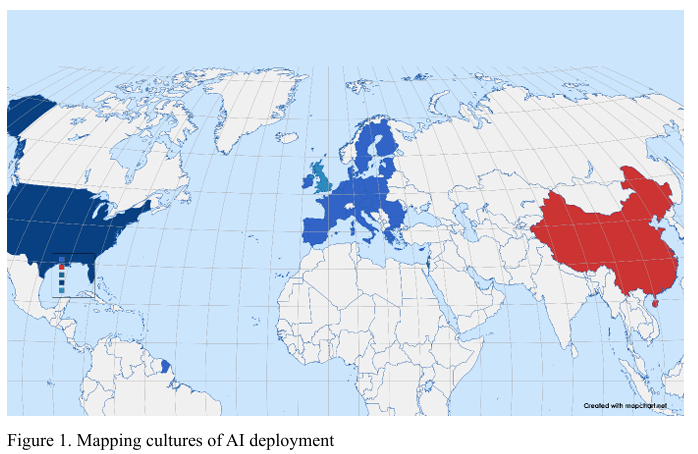
Cultures of technological deployment in times of (geo)political change. How intelligence agencies deploy disruptive technologies
D. Popa (2025)
Typologies of intelligence cultures can be mapped geographically across the globe as well as temporally in time, against forming events or time periods. Deployment by intelligence agencies of disruptive or innovative technologies such as Artificial Intelligence (AI) can be mapped or clustered in cultures and practices and against rigidity of applicable legislations. While attempts of inter-agency alignment of practices of technological deployments are undergoing and to some extent made known to the public, the national and regional context has an impact on how agencies deploy these technologies in both defensive and offensive purposes. Recent geopolitical events, changes in national political agendas and upheavals on the geopolitical stage put pressure on intelligence agencies and publicly underline tension points between accountability and fundamental attributions. The article aims to bring these factors together, looking at the intersection between culture of technological deployment by intelligence agencies, intensity of conflict in the region and changes in national political agendas that put pressure on the position of intelligence agencies
Resilience Analysis proposal for Kharkiv and Mykolaiv Oblasts, Ukraine
D. Popa (2025)
Three years of war have put an extreme toll on the population and the military forces fighting in Ukraine. The frontline areas and implicitly the areas bordering the temporary occupied territories (TOT) present particular challenges regarding access to goods and services.
Forced to simultaneously develop and implement resilience programms in wartime, under conditions of limited resourced and capacity, Ukraine is faced with the challenge of practical implementation against a very tight timeline (or in real time) of what otherwise are medium to long time strategic resilience programms developed by governments based on complex forecasting scenarios.
The resilience proposal makes an inventory of constituent elements of resilience: physical, cognitive, social and informational resilience.
A special section of the analysis is dedicated to veterans, making the case that "reintegration plans”, openly labelled as such, imply the visible distinction of former combating forces as elements that need deliberate and effort driven actions for having a part in society.
Intelligence and security in a polarized world
D. Popa (2025)
In a more polarised and fragmented world, or what nowadays is often called a multi-aligned world, states have to address different kind of challenges within their own borders and outside them. No longer is the world comprised of uniform or coherent blocks of the West, its allies and its opponents as it was during the Cold War. Rather, global alliances change in response to shifting internal priorities and politics, reflecting the old saying: There are no permanent friends, no permanent allies, only permanent interest. These shifts bring about realignments that can be rationalised in a certain geopolitical, economic or social context, but also rapprochements that in a diachronic perspective are surprising in character, being themselves effects of or determining effects that can be characterised on a spectrum ranging from outliers to black swans. In such a world, the concept of security that is central to the state changes, widens, becomes diluted. The current static view of the security concept has already started to change and will continue to do so. This transformation is a reality that at times precedes perception, speed or capacity of reaction, making it that more difficult for states to cover in a timely and comprehensive matter all aspects related to protecting their national security.
Technology, Artificial Intelligence and security trends in JAPAN
D. Popa (2025)
Japan is of strategic importance for Europe in the Pacific region, being aligned technologically, economically and in terms of democratic values with European states. While some argue that such European engagements are rather costly expansionist efforts made at the detriment of consolidating regional stability, given limited resources and capacities that need to be allocated depending on order of priorities, not staying engaged in the Indo- Pacific, and more than that, not actively working towards strengthening these individual or collective ties will limit Europe’s geostrategic role in time and will require searching for alternatives that are less than optimal. Therefore, rather than opportunistically reorient towards global trade partners, Europe should purposefully choose to strengthen “traditional alliances” given already existing “Common ground” – the theme of the Netherlands mission to Osaka.
Book review. Contemporary Intelligence Warning Cases. Learning from Successes and Failures.
The book presents a mix of intelligence case studies from different geographies and time stamps. Their bringing together gives an overview to the reader interested in international security and intelligence and sheds critical perspectives on some historical events. The added value of hindsight gives strength to the analysis, which is perhaps one of the most valuable benefits of the book. The publication of the book is timely and topical. More than ever states are hungry for intelligence, as it gives power and strategic advantage. In a time when state peer and near peer competition is edging on conflict and violence, the role of intelligence agencies is paramount for state security. In the same time, outdated democratic practices become faults that can weaken the state’s capacity for defence if not fine tuned to the requirements of the present and the decisiveness required for defending state interests. For accelerating the process, gaining support and weakening potential latter contestation, the wider public can be informed and persuaded, while at the same time also widening the attrition base of potential employees within the agencies themselves. In order to timely respond to the new threat landscape, legislative and capability adaptations are needed. Lessons on how to best undertake these adaptations can be drawn from former cases of intelligence warnings and failures, for which the book reviewed here wants to be of use.
Reflections on the UK’s 2025 Strategic Defence Review.
D.M. Popa (2025)
This week has seen the publication of the UK’s Strategic Defence Review (SDR), which has caused considerable stir in both specialized and general UK and international circles. A careful read reveals a stark contrast with most public EU member states and EU defence documents. In the UK’s new approach, security and defence become central topics. The strategy contains concrete, punctual action steps, showing that national defence is better suited to be tackled by national level strategies (as is the mandate of defence). The stark tone of the document is backed by the tone of public interventions from the Prime Minister and the Secretary of State for Defence while presenting the document.
With its bold yet down to earth wording, the strategy often reminds of Churchill’s war time speeches, enabling a whole of society approach to resilience and serves as a wake up call for a national engagement with conflict preparedness, mentally and logistically.
Comprehensive resilience systems for state defence. A report on the Dutch and Swedish contexts
D.M. Popa (2025)
Recent geopolitical tensions and a fluid geopolitical context have made it clear that European countries need to ramp up their defence spending and develop comprehensive plans for the defence of their physical and cyber space, with the redundancy or complementarity character of these plans in relation to existing NATO and EU equivalents being debated. The present report reflects upon the increasing need for enhancing whole of society, whole of government approaches to building societal resilience in the face of increased geopolitical threats, reflects on the current status of these plans in Europe, and emphasizes the importance of psychological resilience, the will to defend and the civil – military relationship in these comprehensive plans. Digitalisation levels, country innovation profile and population digital literacy are all interconnected elements in a comprehensive resilience system. The importance of official narratives in countering disinformation and building population psychological resilience is presented. Existing but scattered theoretical frameworks, policy initiatives and programmes are revised and two categories of factors - hard and soft - are proposed for distinguishing the different conceptual elements of population resilience. The analysis combines technological, historical and psychological factors, looking at the effects of their intersectionality and their causality relationship. Against the current and evolving threat landscape, resilience maturity profiles are investigated in two contexts, namely the Netherlands and Sweden. Good practices are presented and implementation recommendations are put forward.
Mapping defence, security and resilience trends and perceptions.
D.M. Popa (2025)
The report presents a regional perspective on the perceptions regarding level of threats, the urgency of needed actions and rank of priorities in terms of building up of defence capabilities and deterrence posture. It is also a snapshot of the regional sentiment on the background of the overspilling tensions from the war in Ukraine and the state of national defence capabilities. It incorporates aspects on geopolitics, the defence industry, defence procurement, resilience programs and legislative actions.